Exploring Spirit: A Script Font for Refined Design
In the world of design, the choice of typeface is never merely a technical decision; it is a strategic one. A font carries personality, sets a mood, and can instantly communicate the values of a brand or project. Among the vast library of premium fonts available to creatives today, Spirit stands out as a particularly compelling option. It is a delicate, refined script font that emanates a sense of sophistication and elegance, making it a powerful tool for designers, entrepreneurs, and content creators aiming for a polished aesthetic.
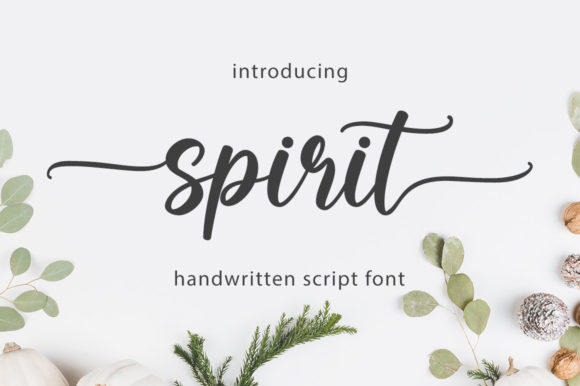
Spirit is designed with a fluid, graceful motion that mimics the natural flow of handwriting but with a level of precision and artistry that elevates it beyond a standard handwritten font. Its visual characteristics are defined by smooth, sweeping curves and a consistent baseline rhythm that feels both organic and controlled. This balance is crucial in modern typography, where the goal is often to create a human touch without sacrificing legibility. The typeface feels personal and intimate, yet it retains a professional edge that prevents it from looking casual or unfinished.
The Power of Stylistic Alternates and Ligatures
One of the most significant strengths of Spirit is its extensive collection of stylistic alternates and ligatures. For those unfamiliar with typography terminology, a ligature is a single character that combines two or more letters, often to improve flow or avoid awkward collisions. An alternate offers a different visual representation of a specific letter. In Spirit, these features are not just add-ons; they are integral to the font’s charm.
These stylish variations allow the text to mimic true calligraphy. When you type a word, you can swap out standard letters for more elaborate versions to create unique compositions. This is particularly useful in logo design and brand identity work. A generic script font can sometimes look repetitive if a word contains repeated letters (like the "o" in "good"). With Spirit, you can utilize different alternates for each "o," creating a dynamic, hand-lettered look that feels authentic. This capability makes it a highly versatile creative font suitable for projects requiring a bespoke feel.
Practical Applications: From Branding to Packaging
Understanding where a font works best is a key skill for any creative professional. Spirit’s refined nature makes it an excellent choice for a wide range of applications, but it truly shines in contexts where elegance and personality are paramount.
Logo Design and Brand Identity
For businesses positioning themselves in the luxury, beauty, wedding, or lifestyle sectors, Spirit can be a cornerstone of a brand identity. A script font like this adds a layer of sophistication to a logo that a standard sans serif font might not achieve. It suggests craftsmanship and attention to detail. However, when using Spirit for logo design, it is vital to ensure the brand name is legible at all sizes. The swashes and flourishes that make Spirit beautiful can become cluttered if the text is too small.
Packaging and Editorial Design
In packaging design, especially for artisanal goods, cosmetics, or gourmet foods, Spirit helps communicate quality. It works beautifully on labels where the product name needs to stand out with an air of exclusivity. Similarly, in editorial design, Spirit can be used for pull quotes, article headers, or magazine titles. Pairing it with a clean, readable serif font or sans serif font for body text creates a strong visual hierarchy, guiding the reader’s eye effectively.
Digital Presence and Social Media
The digital landscape also benefits from Spirit’s aesthetic. In web design, script fonts are often used sparingly for headers or hero text to add emotional impact without slowing down the site or hurting readability. Spirit’s PUA encoding ensures that it renders well across different platforms, making it a reliable asset for web developers. For social media graphics, Spirit is a standout. In a feed dominated by bold, geometric type, a delicate script font can stop the scroll. It is perfect for Instagram stories, Pinterest pins, and promotional banners where you want to convey a message with style and grace.
Technical Precision and Usability
A beautiful design concept can fall apart if the tools are difficult to use. This is where Spirit’s technical specifications become relevant for the end-user. The font is PUA (Private Use Areas) encoded. In practical terms, this means that all the extra glyphs, swashes, and alternates are fully accessible without requiring specialized design software.
While professional designers using Adobe Illustrator or Photoshop have easy access to glyph panels, PUA encoding is particularly helpful for entrepreneurs, hobbyists, and crafters who might be using software like Cricut Design Space, Silhouette Studio, or even Canva. It ensures that the full character set is available to everyone, democratizing access to high-end typographic features. This accessibility makes Spirit a valuable addition to any library of design assets.
Strategic Pairing and Readability
Using a display font like Spirit effectively requires a strategy, particularly regarding font pairing. Because Spirit is ornate and carries a lot of visual weight, it generally should not be paired with another decorative font. The rule of contrast applies here: high complexity pairs best with high simplicity.
A classic recommendation is to pair Spirit with a geometric sans serif font like Montserrat or Lato for a modern, clean look. Alternatively, pairing it with a traditional serif font like Garamond or Times New Roman can create a timeless, literary aesthetic. The goal is to let Spirit be the star of the show for headlines or focal points, while the secondary font handles the heavy lifting of body copy. This ensures that your design maintains readability while retaining visual interest.
Evaluating Fit and Licensing
Before integrating Spirit into a project, it is worth taking a moment to evaluate the fit. Ask yourself: Does this font match the voice of the content? If you are designing for a law firm or a construction company, a delicate script might feel out of place. However, for a wedding invitation, a boutique clothing label, or a wellness blog, Spirit is an ideal match.
Furthermore, because Spirit is a commercial font, it comes with a license. It is essential for business owners and designers to review the licensing terms. Most commercial licenses allow for a wide range of uses, but if you are purchasing for a large team or a specific high-volume application, checking the End User License Agreement (EULA) is a professional best practice. This ensures that your use of the font remains compliant and protects your client’s brand identity legally.
Ultimately, Spirit is more than just a collection of vectors; it is a tool for storytelling. By leveraging its elegant curves, accessible alternates, and professional encoding, creatives can produce work that feels polished, intentional, and deeply human. Whether used in print or digital, Spirit proves that modern typography is about finding the perfect balance between beauty and utility.